I first looked through a Nikon 100mm f/12 ED at the Winter Star Party. An astro-friend had brought his, and we dropped in a pre-WWII Zeiss monocentric 25mm to see what the combination would do.
It was crystalline. That’s the only word for it. The kind of view that resets your sense of what a 4-inch refractor is supposed to deliver — no false color, no softness, no fuss. Just an image that felt etched. I knew that first night, looking through his scope, that I’d have to buy it from him.
It took some time, but a deal came together. He had originally imported the scope into the U.S. from Japan, working with another amateur astronomer over there — a wonderful guy who, over the next stretch, also sold me the matching Nikon equatorial mount and pier, and a long list of original accessories to round out the system.
That’s how mine came together — from two amateurs on opposite sides of the Pacific who knew exactly what these scopes were and what they were worth taking care of. The scope that first showed me what it could do is the same one sitting in my setup now.
About the scope
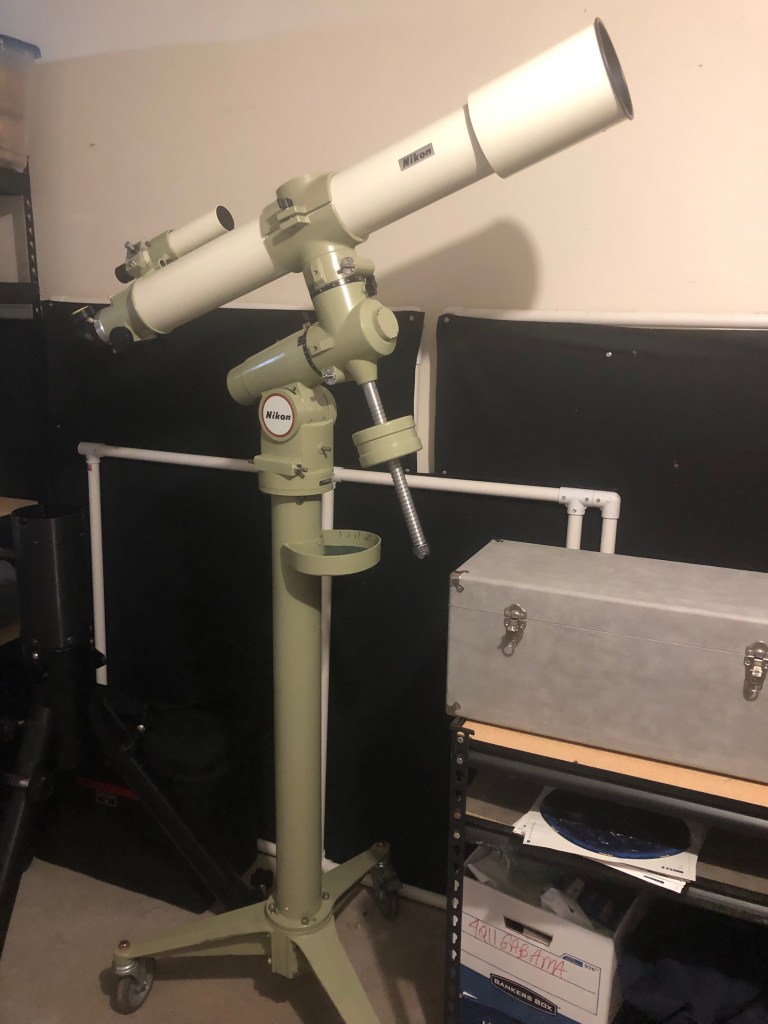
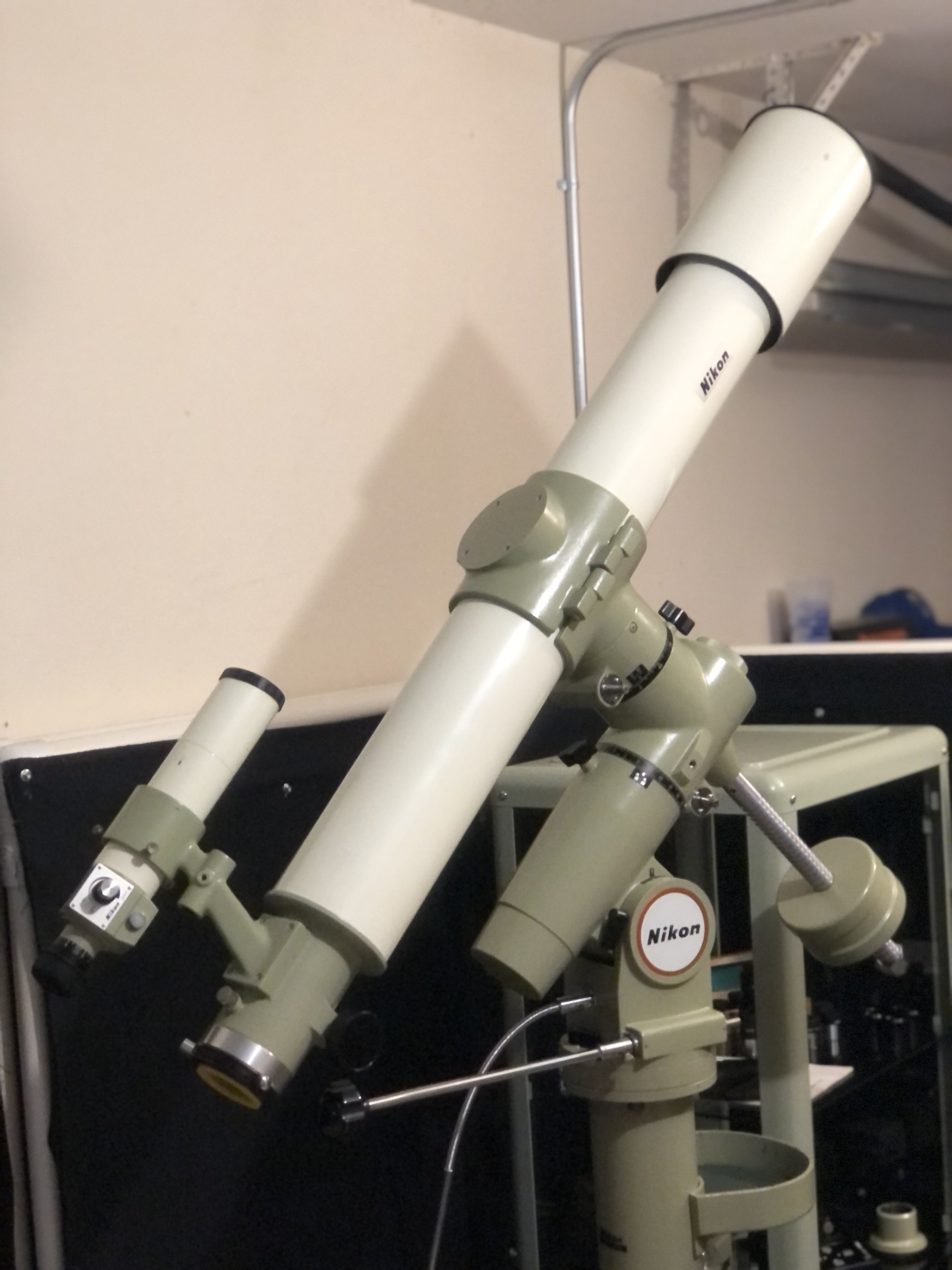
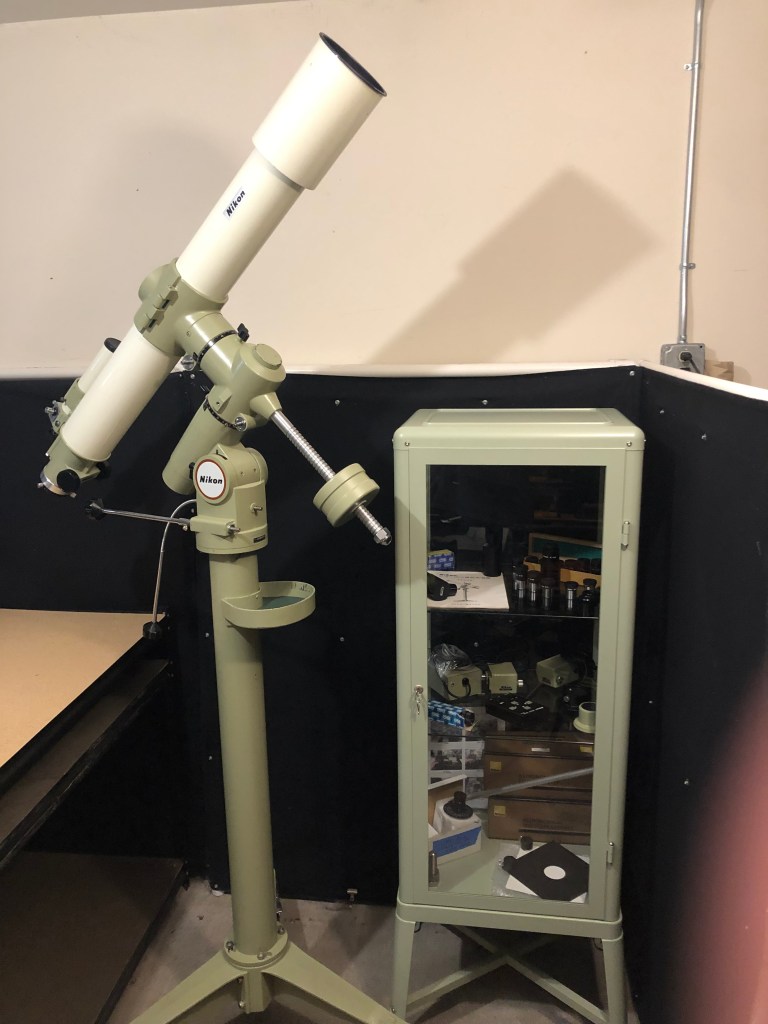
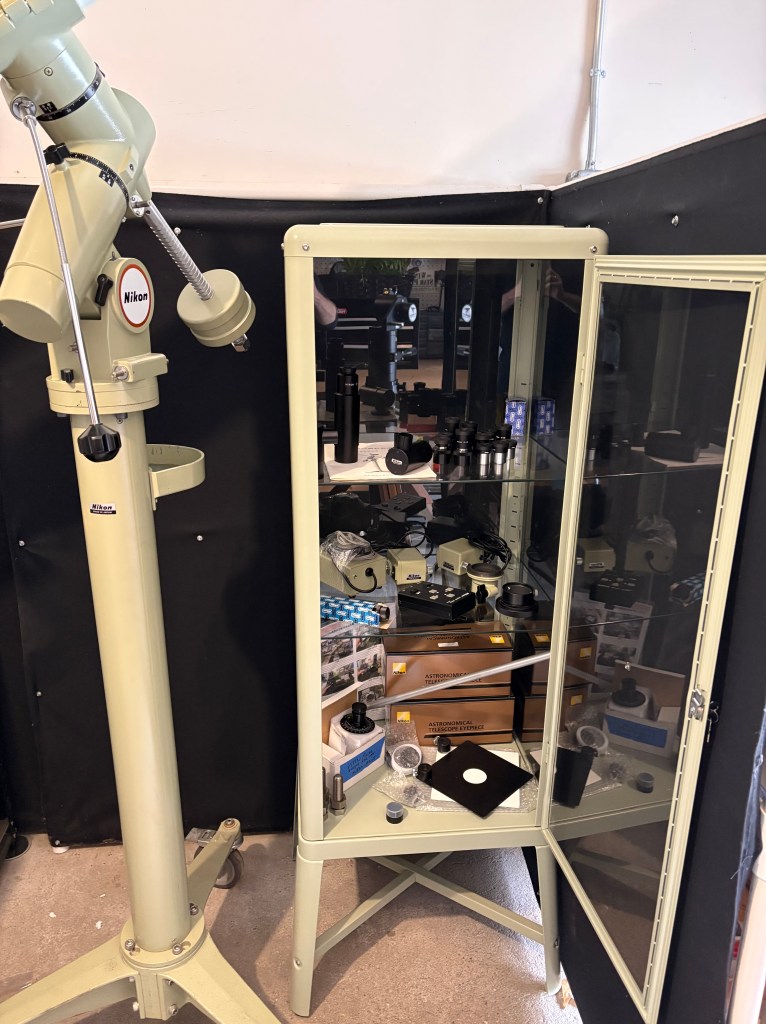
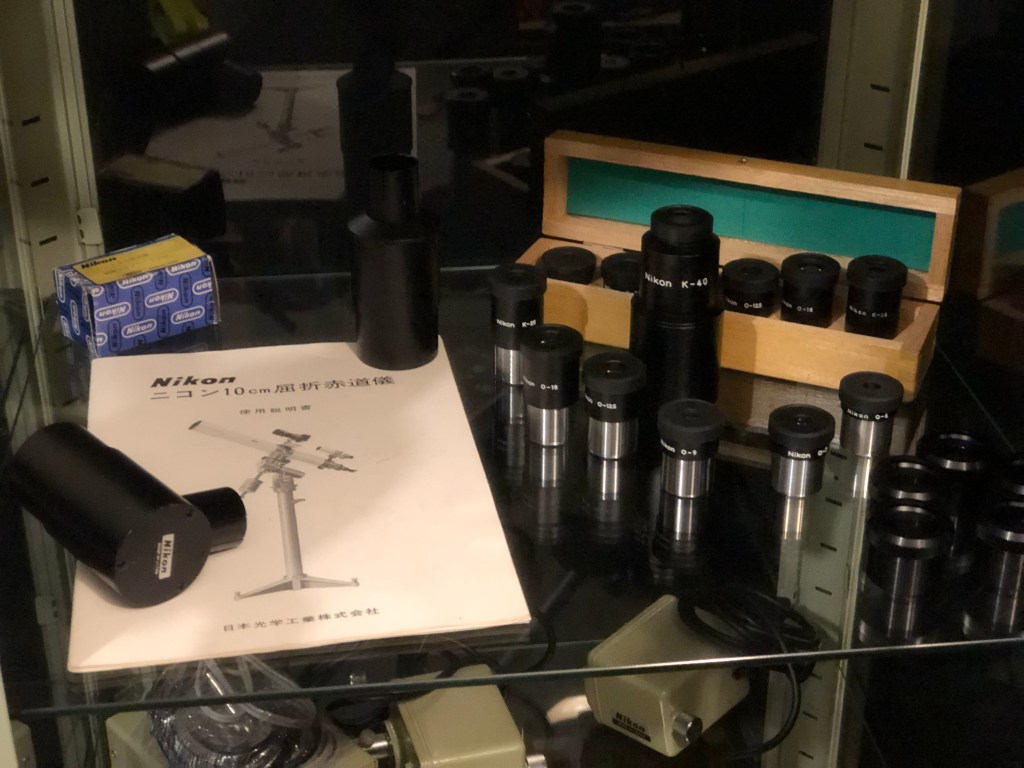
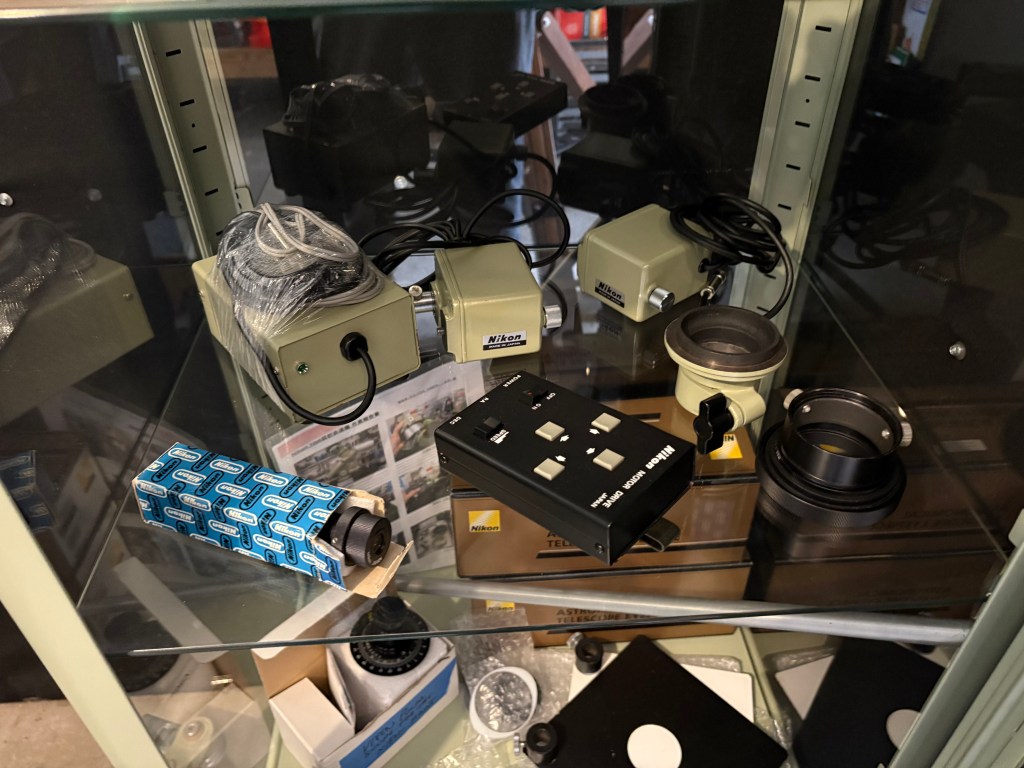
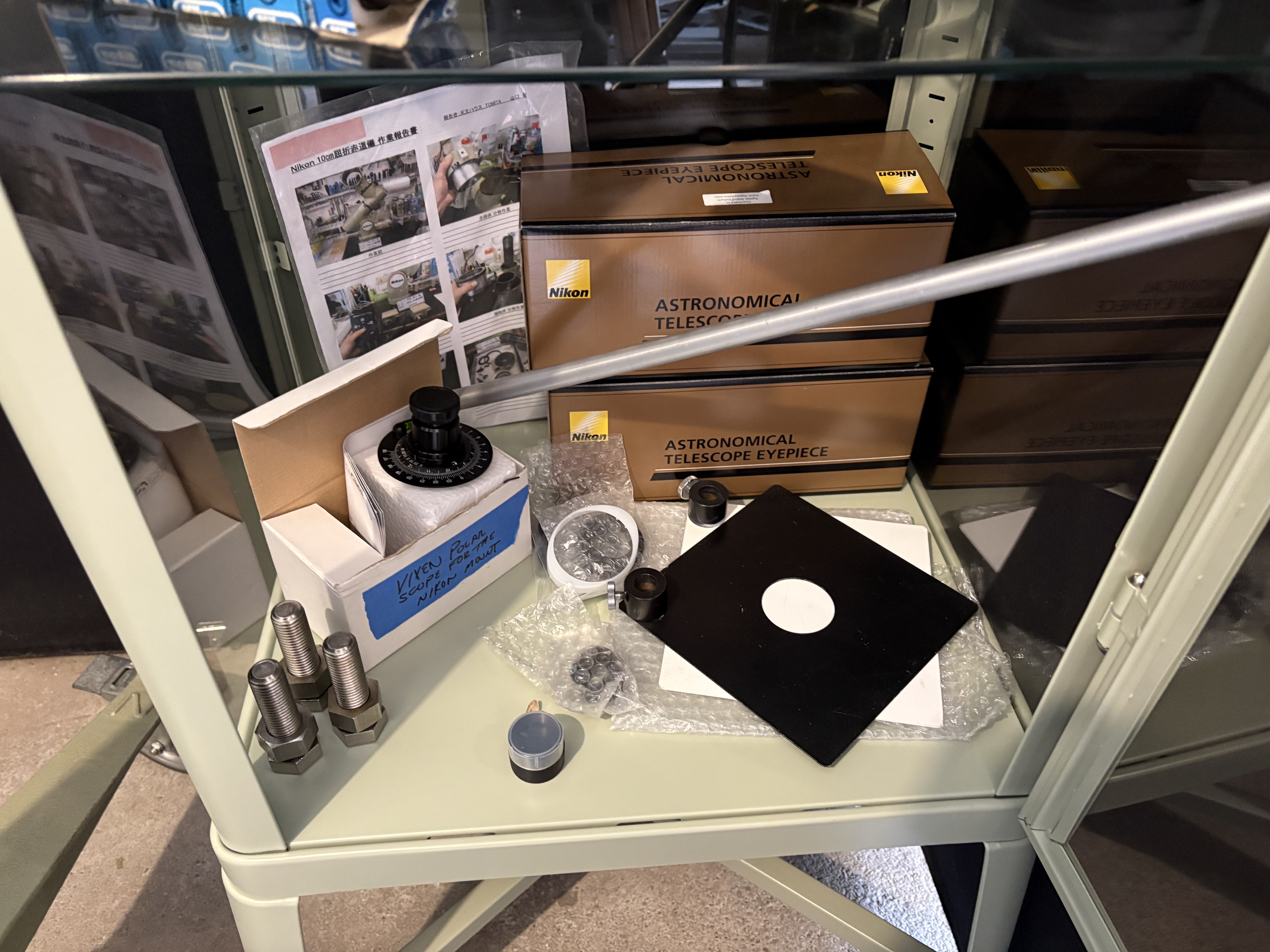
The Nikon ED100 was the flagship of a small refractor line Nikon offered from the mid-1980s through roughly the year 2000 — alongside the S65 achromat and the ED65 doublet. The ED100 is a 100mm f/12 ED doublet, 1200mm focal length, sold as a complete system with a heavy cast motorized equatorial mount and pier, a 50mm illuminated finder, the famous Nikon orthoscopic .965″ eyepieces, the ultra-rare K-40 Kellner, a clamshell, a solar projection screen, multiple other astro-photography accessories, a wooden transport case and more! It was truly its own astro-ecosystem.
It was a competitive segment at the time. Four scopes went head-to-head for the high-end planetary refractor buyer: the Vixen 102 fluorite at f/9, the Pentax 105 at f/9.5, the Takahashi FC-100N at f/10, and the Nikon 100mm f/12. The development of the Nikon ED line is widely understood to have reflected the broader Nikon-Canon optical rivalry of that era.
Production was small. Nobody knows exactly how many ED100s Nikon built. Estimates from collector communities range from a few hundred to perhaps six hundred total — debated, not documented, because Nikon never published the numbers. The scope rarely appears on the used market, and clean examples have been trading above $6,000 for the OTA alone.
The glass is part of the story. Nikon melted its own ED material for these objectives and never disclosed the formulation. Interferometry testing by Wolfgang Rohr, circulating among collectors over the years, has shown high-quality figures on most examples with some unit-to-unit variation.
What it does
I use it as a visual instrument. The long focal length and the doublet design were optimal for the eyepiece, but of course well suited for astro-photography as well. It is at its best on planets, the moon, double stars, and tighter open clusters — anywhere contrast and high-power resolution matter more than aperture or speed. The f/12 ratio delivers what long-focus doublets always deliver: high contrast, minimal residual color, an image that holds together at magnification.
That’s what I saw at the Winter Star Party with the Zeiss monocentric. It’s what the scope still does now, sitting on the Nikon pier that came across from Japan with the rest of the system.


Leave a Reply